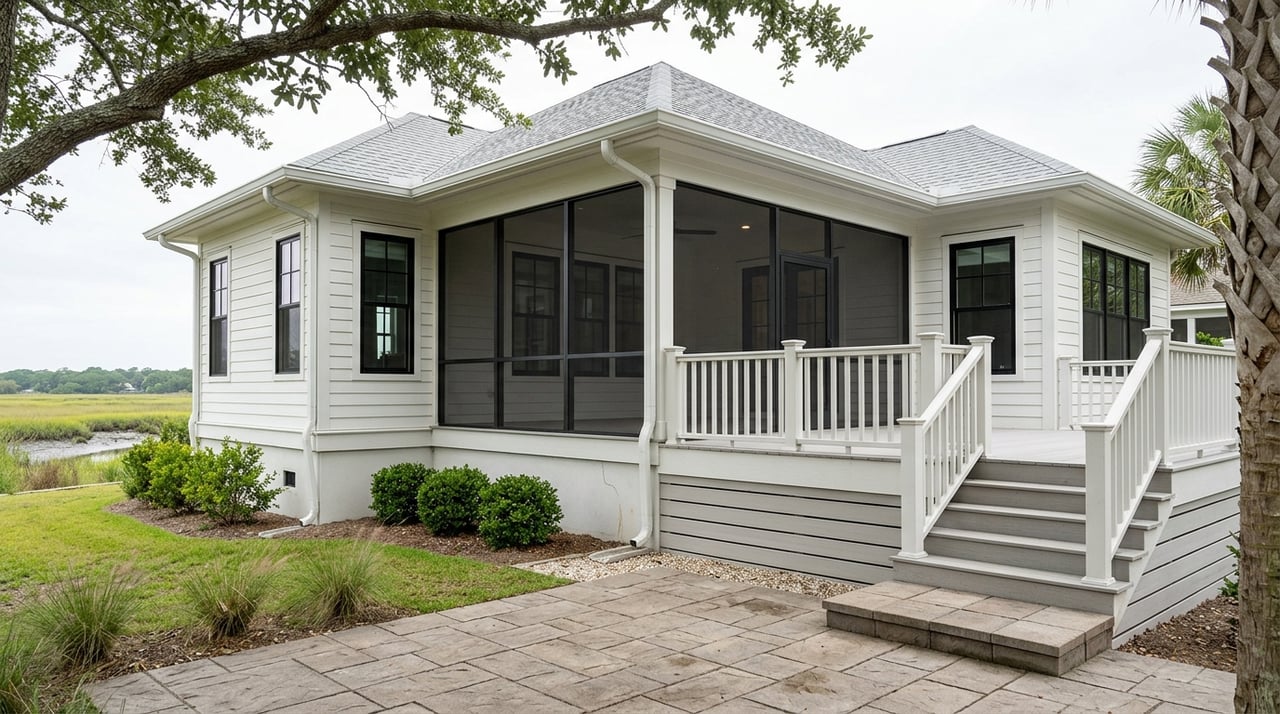
Thinking about a marshfront home in Mid-South St. Simons? The view can be stunning, but the smartest buyers know the purchase is about more than scenery alone. If you want to enjoy the lifestyle and protect your long-term investment, you need to understand flood data, insurance, maintenance, and permitting before you fall in love with a lot. Let’s dive in.
Why marshfront homes command attention
Marshfront homes often carry a premium because buyers are not just purchasing square footage. They are also paying for the visual setting, the open outlook, and the sense of connection to the coast.
That premium is not just anecdotal. Freddie Mac research on coastal home pricing found that water views can add meaningful value, and a 2024 study referenced in that report shows coastal real estate can still sell at a premium even when buyers are aware of storm and sea-level-rise risks. For Mid-South St. Simons, that means the marsh view is a real market amenity, but it should be judged lot by lot, not by a one-size-fits-all percentage.
Why Mid-South St. Simons buyers look closely
In Mid-South St. Simons, marshfront appeal often comes down to the balance between lifestyle and due diligence. You may love the light, the open marsh vistas, and the natural setting, but the exact parcel matters just as much as the house itself.
According to the University of Georgia’s coastal resiliency resources, salt marshes help reduce erosion, buffer wave energy, and filter runoff. That ecological role helps explain why these homes remain desirable, even as buyers become more aware of climate and flooding concerns.
Flood zone should come first
Before you make an offer on a marshfront home, confirm the parcel details through Glynn County GIS Services. The county provides public access to parcel maps, flood zones, storm surge information, and elevation data.
This step matters because marshfront buying is highly parcel-specific. Two homes with similar views can have very different flood exposures, elevations, and insurance costs. Glynn County also notes that its elevation contours are rounded to the nearest foot, so a surveyor’s verification is still important before you rely on a map alone.
What to verify on the parcel
When you are evaluating a Mid-South St. Simons marshfront property, focus on these basics:
- Exact flood zone
- Storm surge exposure
- Elevation data for the lot
- First-floor height relative to base flood elevation
- Whether an elevation certificate is available
- Past permit history for improvements or repairs
These details can shape both your monthly budget and your long-term flexibility as an owner.
Insurance costs need a real quote
One of the biggest mistakes buyers make is assuming flood insurance will be manageable without getting an actual quote. Glynn County’s flood protection program makes it clear that homeowners insurance does not cover flood damage, and NFIP flood insurance is available countywide.
The county also notes that flood policies generally have a 30-day waiting period before coverage begins. That means insurance planning should happen early, not after closing is already around the corner.
FEMA’s pricing approach goes beyond the flood map zone alone. Pricing can be affected by flood frequency, elevation, distance to water, rebuilding cost, flood vents, and other factors. In plain terms, two homes in the same general area may not carry the same insurance cost.
Good news for Glynn County buyers
There is a local cost advantage worth knowing. Glynn County’s Community Rating System page says unincorporated Glynn County is a Class 5 CRS community, which gives policyholders a 25% flood-insurance discount.
That is helpful, but it should not replace a real insurance quote during your due diligence period. For a marshfront home, list price is only one piece of the affordability picture.
Elevation history affects future plans
If you are buying a home with plans to renovate, expand, or make major updates, you need to understand the property’s elevation and improvement history. Glynn County states that if a home or business is in the floodplain, an elevation certificate is required to obtain a building permit, and all development in the floodplain requires a permit.
The county also explains the NFIP substantial-improvement rule. If reconstruction, rehabilitation, additions, or other improvements equal or exceed 50% of the building’s market value, the structure must meet the same construction requirements as a new building.
Why this matters to you
This rule can affect:
- Major remodel plans
- Additions or reconfigurations
- Repair work after storm or water damage
- The true cost of updating an older marshfront home
A home that seems like a cosmetic project may become more complex if prior work, current value, or floodplain rules trigger additional requirements.
Marshfront maintenance is different
Owning near the marsh is not the same as owning farther inland. Coastal humidity and moisture can place more stress on the home over time, especially if drainage, ventilation, or dehumidification are not handled well.
The University of Georgia’s Healthy Housing guidance recommends keeping indoor relative humidity below 60%, fixing leaks quickly, keeping gutters draining away from the home, and drying wet materials within 24 to 48 hours. UGA also notes that persistent moisture creates conditions that can support pest issues.
For you as a buyer, that means maintenance should be part of the purchase decision, not an afterthought after move-in.
Common areas to watch
On a marshfront property, pay close attention to:
- Drainage around the home
- Gutters and downspouts
- HVAC performance and dehumidification
- Exterior finishes and sealants
- Signs of past moisture intrusion
- Landscaping that may hold water too close to the structure
These are not reasons to avoid marshfront ownership. They are simply part of buying the view with open eyes.
Salt, sun, and wind add wear
Coastal conditions also affect the outside of the home. UGA coastal ecology resources note that Georgia’s coastal systems are shaped by salt spray, strong winds, rapid drainage, shifting conditions, and constant sun exposure.
That combination can mean more frequent attention to finishes, sealants, drainage systems, and landscaping choices than you might expect with a similar inland property. If you are comparing two homes at similar price points, maintenance burden should be part of the comparison.
Marsh-edge work may need permits
If your dream property includes future plans for a dock, shoreline work, or changes near the marsh boundary, be careful not to assume those projects are simple. The Georgia DNR Marsh & Shore Permits program oversees permits for projects that may affect marshlands, beaches, and tidally influenced coastal waters.
That means marshfront ownership can come with more regulatory review than inland ownership. Existing shoreline structures, docks, bulkheads, or similar features should be reviewed carefully during due diligence.
Questions worth asking early
Before you close, ask:
- Are any docks or shoreline structures already permitted?
- Has any marsh-edge work been done in the past?
- Will future plans require state or local review?
- Are there records that confirm compliance?
These answers can help you avoid surprises later.
Think in total ownership cost
The best way to evaluate a Mid-South St. Simons marshfront home is to look beyond the purchase price. A lower-priced home with higher insurance, more maintenance, and stricter renovation limits may not be the better value over time.
The Georgia Climate Project’s coastal data reports that coastal Georgia has experienced more than 10 inches of sea-level rise since 1935 and that heavier downpours combined with rising seas are already contributing to more frequent and expansive flooding. The report also notes that the Georgia Department of Natural Resources recommends planning for 4 to 6.3 feet of sea-level rise by 2100.
You do not need to panic, but you do need to plan. For a 30-year ownership horizon, resilience, carrying costs, and parcel-specific risk deserve the same attention as the marsh view itself.
A smart buyer checklist
If you are serious about a marshfront purchase in Mid-South St. Simons, build your due diligence around facts, not assumptions.
Use this checklist as a starting point:
- Confirm the exact flood zone through county GIS
- Review available elevation data and any elevation certificate
- Request a current flood-insurance quote
- Ask about prior flood claims or repetitive-loss issues
- Review permit history for additions, repairs, and shoreline features
- Ask whether past or future work could trigger substantial-improvement rules
- Inspect drainage, humidity control, and exterior wear carefully
- Compare total carrying cost, not just purchase price
A marshfront home can absolutely be a great fit. The key is making sure the numbers, condition, and parcel details support the lifestyle you want.
If you are weighing marshfront options in Mid-South St. Simons and want clear, local guidance, Lori Lynn can help you compare properties, ask sharper due diligence questions, and move forward with confidence.
FAQs
What should you check before buying a marshfront home in Mid-South St. Simons?
- You should verify the parcel’s flood zone, elevation data, elevation certificate availability, insurance quote, permit history, and any prior claims or shoreline improvements.
How do flood maps affect a marshfront home purchase in Glynn County?
- Flood maps help you understand flood zone, storm surge exposure, and elevation context, but Glynn County notes that mapped contours are rounded, so survey-level verification may still be needed.
Does homeowners insurance cover flooding for marshfront homes on St. Simons Island?
- No. Glynn County states that homeowners insurance does not cover flood damage, so you should evaluate separate flood insurance early in the buying process.
Why do marshfront homes in St. Simons often cost more?
- Marshfront homes can command a premium because buyers value the water view, open setting, and coastal lifestyle, though the premium varies by parcel and property details.
What maintenance issues are common with marshfront homes in coastal Georgia?
- Moisture control, drainage, ventilation, exterior finishes, and humidity management often need closer attention because coastal conditions can increase wear over time.
Can you add a dock or modify the marsh edge on a St. Simons marshfront property?
- Maybe, but projects that affect marshlands, beaches, or tidally influenced coastal waters may require review through Georgia DNR’s Marsh & Shore Permits program.