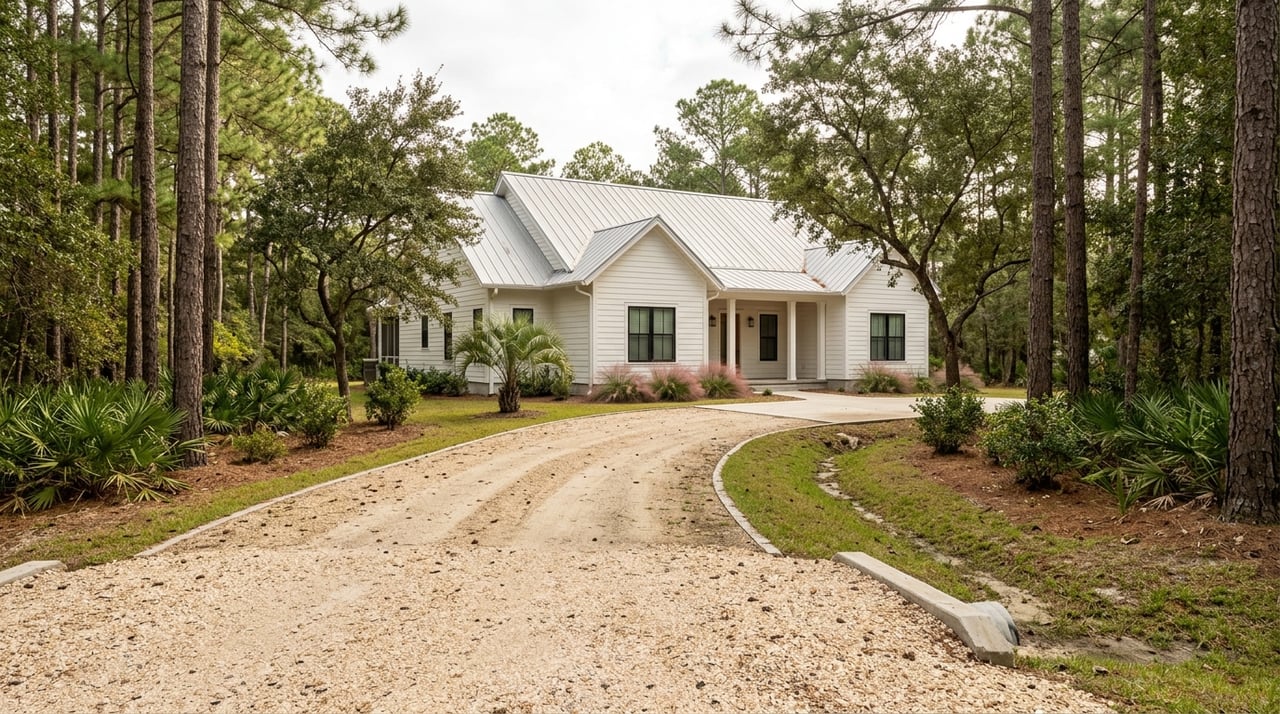
Thinking about buying acreage north of Brunswick? A larger tract can give you room to build, invest, or plan for future use, but it also comes with more moving parts than a typical homesite. If you know what to check before you buy, you can avoid surprises and make a more confident decision. Let’s dive in.
Why acreage purchases work differently
When you buy acreage in Glynn County, you are not just buying land on a map. You are also buying into a set of rules about zoning, access, utilities, drainage, and environmental limits. What looks simple at first glance can become more complex once you ask how you plan to use the property.
That is especially important right now because Glynn County approved rewritten subdivision regulations and zoning ordinances on April 16, 2026, with implementation scheduled for July 1, 2026. According to Glynn County’s announcement on the ordinance rewrite, the effective code date matters, so you need to verify which ordinance applies to the parcel you are considering.
Start with zoning and jurisdiction
One of the first things to confirm is who governs the property. Mainland properties are generally handled by the Mainland Planning Commission unless they fall within the City of Brunswick, the Islands Planning Commission area, or Jekyll Island Authority territory. That means two parcels that seem close together may not follow the same review path.
Glynn County’s planning resources and parcel, zoning, and district tools are a smart place to start. Before you make assumptions about what you can build or divide, confirm the parcel’s exact jurisdiction and current zoning designation.
Common acreage-oriented districts
In the county’s rewrite materials, some of the districts acreage buyers may see include Forest Agricultural, Conservation Preservation, and Residential Estates. The same materials describe FA as a lower-intensity rural district, CP as preservation and open-space land, and RE as very low-density single-family land that is often beyond central water and sewer.
There is also Planned Development, which is used for property-specific master plans. You can review these district descriptions in the county’s draft zoning ordinance materials. Because the county is in a transition period, it is important to verify the exact district name, permitted uses, and effective ordinance version for the parcel.
Check whether your intended use fits
Acreage north of Brunswick can support a range of uses, but not every tract will fit every plan. The county’s draft materials list uses tied to larger tracts such as lower-intensity rural residential use, conservation and open-space, livestock, nurseries, produce stands, restricted agriculture, tree harvesting, and wildlife refuge.
In practical terms, that means a parcel may work well for a single homesite, low-intensity agricultural use, timber-related use, or a carefully planned development if the zoning and site conditions line up. If your goal is to build more than one home, split the property, or change the use, ask early whether rezoning, a variance, or subdivision review may be required.
Why the comprehensive plan matters
The Glynn County 2023 Comprehensive Plan helps guide future growth and supports state funding and permit eligibility. It is not just background reading. It can offer useful context about how an area is expected to develop over time.
It is also important to know that rezoning and variances are reviewed through public planning meetings, not treated as routine administrative approvals. If you are buying with future changes in mind, build extra time into your plans.
Utilities can change the math quickly
Utilities are one of the biggest factors in whether land feels ready to use or expensive to improve. For new development, the Brunswick-Glynn Joint Water and Sewer Commission says the first step is determining whether public water or sewer is available. In some cases, residential availability can be confirmed quickly, but service responsibility depends on the specific location.
That is why you should check each parcel individually rather than assume service is available because it is north of Brunswick. BGJWSC outlines this process on its new connections and utility availability page.
If public water or sewer is not available
If a tract does not have public service, you should expect to explore on-site systems. In Glynn County, the Coastal Health District handles individual well-water permitting and testing, along with on-site sewage management applications through its environmental health well-water resources.
Georgia public health guidance notes that private wells should be located away from pollution sources and not in flood-prone areas unless siting requirements are met. Soil conditions matter too. The research report notes that NRCS soil surveys help evaluate drainage, ponding, water table depth, and septic absorption-field suitability, all of which can affect whether a property is practical for your plans.
Access is more than road frontage
A tract can look accessible online and still raise questions once you dig deeper. Legal access, driveway placement, utility installation, and road improvements can all affect cost and timing. This becomes even more important if you plan to create multiple homesites or divide the property.
Glynn County requires right-of-way permits for work in county rights-of-way, including driveway access and utility work. If the parcel has frontage on a state highway, Georgia DOT access-management permits may also come into play. The county’s subdivision regulations are also aimed at roads, drainage, and utilities, so access review should happen early.
Questions to ask about access
Before you move forward, it helps to get clear answers to questions like these:
- Is there documented legal access to the parcel?
- Will a new driveway require county or state approval?
- If you plan to split the tract, will the existing access support that layout?
- Are there drainage or road-improvement requirements tied to development?
These questions can save you from buying land that is harder to use than it first appeared.
Flood risk still matters inland
Many buyers associate flood concerns with coastal or waterfront property, but inland acreage can have flood risk too. FEMA notes that flooding can result from heavy rain, poor drainage, and nearby construction, not just proximity to a major waterway. The official place to review flood-hazard products is the FEMA Flood Map Service Center.
Glynn County also offers GIS tools with flood-zone, storm-surge, and elevation data through its Story Maps and GIS resources. The county notes that unincorporated Glynn County is a Community Rating System Class 5 community, which corresponds to a 25% flood-insurance discount. The county also notes that flood policies typically have a 30-day waiting period before coverage starts, so it is smart to look into this early.
Wetlands can limit usable acreage
One of the biggest surprises for land buyers is that total acreage does not always equal buildable acreage. Wetlands, streams, drainage patterns, and other environmental features can reduce where you can place a home, road, or other improvements.
The EPA explains that under Section 404 of the Clean Water Act, a permit is generally required before dredged or fill material is placed in waters of the United States, including wetlands. The research report also notes that the U.S. Army Corps of Engineers Savannah District says work in waters or wetlands anywhere in Georgia may require a Corps permit. Ongoing farming and silviculture activities can be exempt in some cases, but filling wetlands for structures is not.
What this means for buyers
If you are comparing two similarly sized tracts, the better value is not always the one with the larger number of acres. A parcel with fewer environmental constraints may give you more usable land and a simpler path to development. That is why flood maps, wetland review, and soils information should be part of your due diligence from the start.
A simple acreage due diligence checklist
If you are buying acreage north of Brunswick, here is a practical checklist based on the local agencies and planning resources in the research:
- Confirm the parcel’s exact zoning and jurisdiction.
- Verify your intended use against the current ordinance and the comprehensive plan.
- Check whether public water and sewer are available through BGJWSC.
- If utilities are not available, review septic and well feasibility.
- Verify legal access and any driveway or right-of-way permit needs.
- Review flood-zone, storm-surge, elevation, wetland, and soil conditions.
- Ask whether a subdivision, rezoning, variance, or other public review may be required.
Working through these steps early can help you separate a promising opportunity from a parcel that may require more time, cost, or approvals than you expected.
What to expect during the buying process
Acreage transactions often move differently than traditional home purchases. You may need more time for research, agency calls, mapping, and site review before you feel comfortable moving forward. That is normal.
The key is to treat due diligence as part of the value of the purchase, not as an extra chore. When you understand zoning, utilities, access, and environmental conditions upfront, you can make decisions with more clarity and less stress.
If you are considering land in Glynn County and want a local guide who understands acreage, lifestyle property, and the details that can shape a purchase, Lori Lynn is here to help you sort through the questions, identify red flags early, and move forward with confidence.
FAQs
What should you verify before buying acreage north of Brunswick?
- You should confirm zoning, jurisdiction, intended use, utility availability, septic and well feasibility, legal access, and flood or wetland conditions before you buy.
How do zoning changes in Glynn County affect acreage buyers?
- Glynn County approved rewritten subdivision regulations and zoning ordinances with implementation scheduled for July 1, 2026, so the parcel’s effective code date can affect what rules apply.
Does acreage in Glynn County always have public water and sewer?
- No. BGJWSC says availability depends on the parcel’s location, so service should be checked property by property.
Can flood risk affect inland land north of Brunswick?
- Yes. FEMA says flood risk can result from heavy rain, poor drainage, and nearby construction, even on inland property.
Does total acreage equal buildable acreage in Glynn County?
- Not always. Wetlands, streams, flood conditions, soils, and access limits can reduce how much of a tract is practical for building or development.