Golfers who play the second hole at Sanctuary Golf Club for the first time tend to stop at the base of a cart path that climbs roughly 20 feet to a second tee box perched above the fairway. A recent GolfPass review describes the sight as jarring; the reviewer says the point became clear after he hit driver from up there. Flat Lowcountry ground doesn't give a golf course much drama on its own, so the course's owner built some.
That ramp is easy to miss if you drive past the clubhouse on your way to the pool instead of the tee sheet. But it's a small, physical clue to changes at the course over the past several years: it has been rebuilt, re-owned, and repositioned, and 2026 marks 20 years since it opened. The course you see today, and the one Fred Couples and Love Golf Design finished in 2006, are related but not identical.
The Club Inside the Gates Isn't Run by the Neighborhood
It's worth separating two things that get lumped together in casual conversation around Sanctuary Cove. The Sanctuary Cove Community Association is the homeowner side. It runs the River House, the community pool, the tennis courts, and the storage area, and it answers to residents.
The golf course is a different animal. It operates as Sanctuary Golf Club, a semi-private facility open to the public, and it is owned and run as a business, not a neighborhood amenity board. That distinction matters because decisions about turf investment, tee times, membership pricing, or new construction on the course are made by the golf club's operator.
Who Actually Owns the Course
The course belongs to Steve Dawson, who founded the Hatch Chile Co. in 1987 and built it into a national brand of peppers, salsas, and enchilada sauces sold across U.S. grocery chains. Golf is his second act, and Sanctuary isn't his only property. Dawson also owns Heritage Oaks Golf Club in Brunswick, and the two clubs are now marketed and staffed together as sister courses.
What Two Decades Did to the Scorecard
The course's original marketing described a par-71 layout stretching just over 7,000 yards, a modest, walkable track by modern standards. Current listings put the same course at 7,500 yards and a par of 72. Numbers like that don't drift on their own. Someone builds new tees, moves a green back, adds length.
The most visible version of that work sits at holes 2, 14, and 18, where Dawson's team constructed elevated, artificial tee complexes to break up terrain that would otherwise play dead flat from start to finish. It's an unusual move for a Lowcountry course, where builders typically work with the land instead of against it. The payoff, according to the same golfer who found the ramp jarring, is a genuinely different sightline off the tee, something the original 2006 design didn't offer.
The Cottages at the Edge of the Practice Range
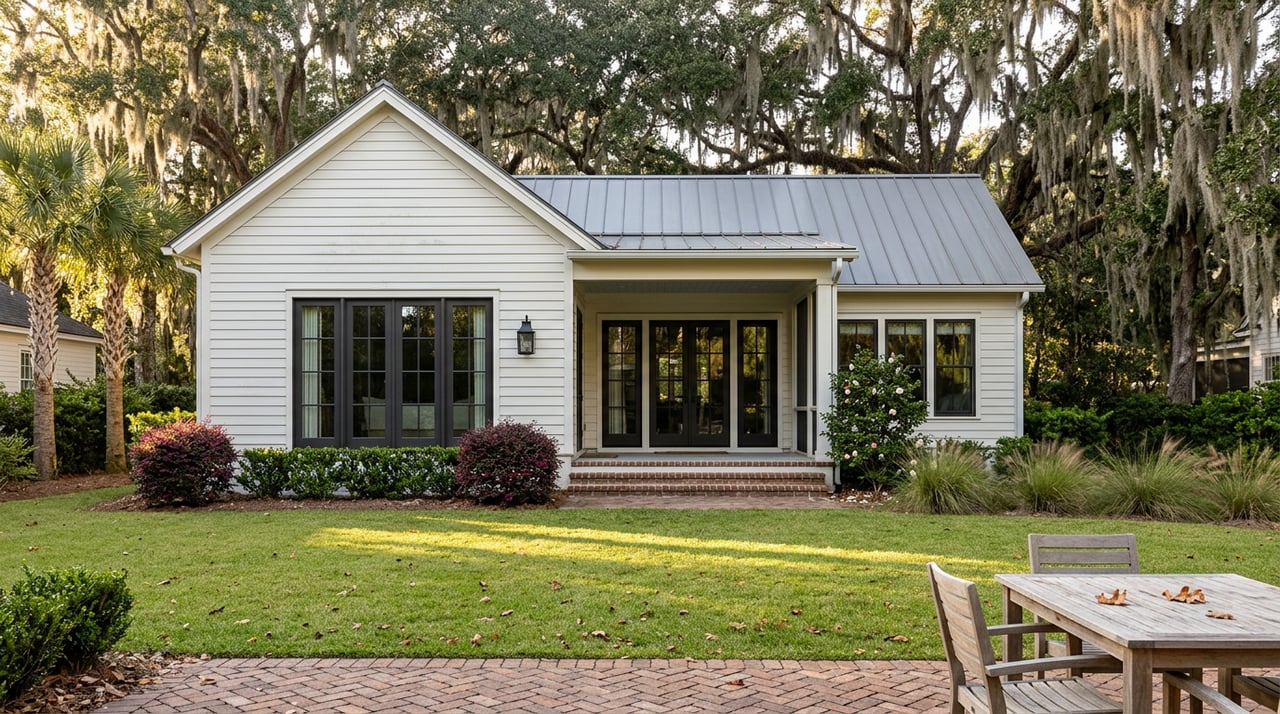
If you've noticed unfamiliar faces walking the cart paths near the driving range on a random Tuesday afternoon, there's a reason that isn't your neighbors being unfriendly. Dawson built five two-bedroom cottages within walking distance of the clubhouse, each with a screened porch that looks out over the practice facility: a large putting green, a chipping green, a full driving range, and an indoor simulator and learning center. Guests who book a cottage get free simulator time as part of the stay.
In practice, that turns a slice of the community's edge into a small stay-and-play operation catering to golfers escaping colder winters, some of whom rent for weeks or months at a time. It's a smart way to fill rooms in a market with limited hotel inventory near the course, and it means a meaningful share of the people you pass near the practice green are visitors on an extended golf trip, not year-round residents.
The Ranking That Actually Means Something
Golf Advisor named Sanctuary Golf Club to its Top 25 U.S. Course Conditions list for 2025, ranking it 15th nationally. The course had also placed in Golf Advisor's Georgia rankings in prior years, coming in 8th in 2022 and 9th in 2023.
A conditions ranking is a narrower, more useful signal than a general "best courses" list. It measures turf health, green speed, bunker maintenance, and day-to-day upkeep rather than design pedigree or resort amenities. A 15th-place national ranking on that specific list offers a snapshot of the course's conditions, and it's a more relevant measure of current conditions than a general "top course" list built on reputation alone.
What's Arriving Next
The amenity mix around the course is still shifting. A few changes currently listed by the club and community marketing:
- Pickleball courts, described as "coming soon" on multiple current listings, joining the existing tennis courts near the River House.
- A newly built gym, described by the community's own marketing as "brand new, state-of-the-art," alongside the walking and biking trails already in place.
Neither of these additions is golf-specific, and together they suggest an operator hedging against a membership base that wants more than fairways. If you've wondered whether the community is quietly becoming less golf-centric and more broadly recreational, the pickleball courts are your answer.
Twenty Years of Change at Sanctuary Golf Club
None of this changes who technically owns your street or your HOA dues. But it does mean the single largest piece of shared scenery in Sanctuary Cove, the course most homes are built to look out on, is being shaped by decisions made outside the neighborhood's control, by an owner balancing two properties and a stay-and-play cottage business.
Twenty years ago this course opened as a modest, walkable Fred Couples design. Today it's longer, more vertical in places it never used to be, ranked nationally for conditions rather than reputation, and increasingly built to host guests as much as members. That's a different asset than the one the neighborhood was originally built around, even if the name on the scorecard hasn't changed.
If you're curious how these changes at the course have shown up in interest around Sanctuary Cove, or you just want a longer conversation about what living here actually looks like day to day, Lori Lynn would be glad to talk it through. Let's Connect.