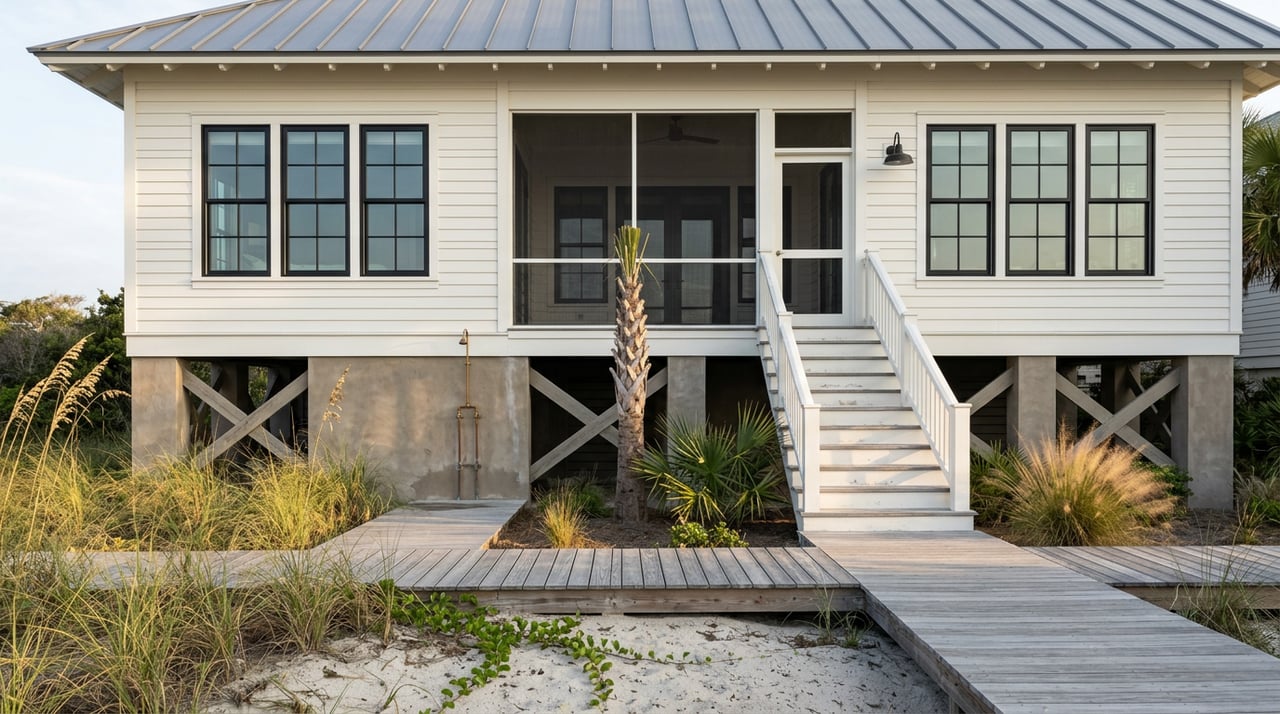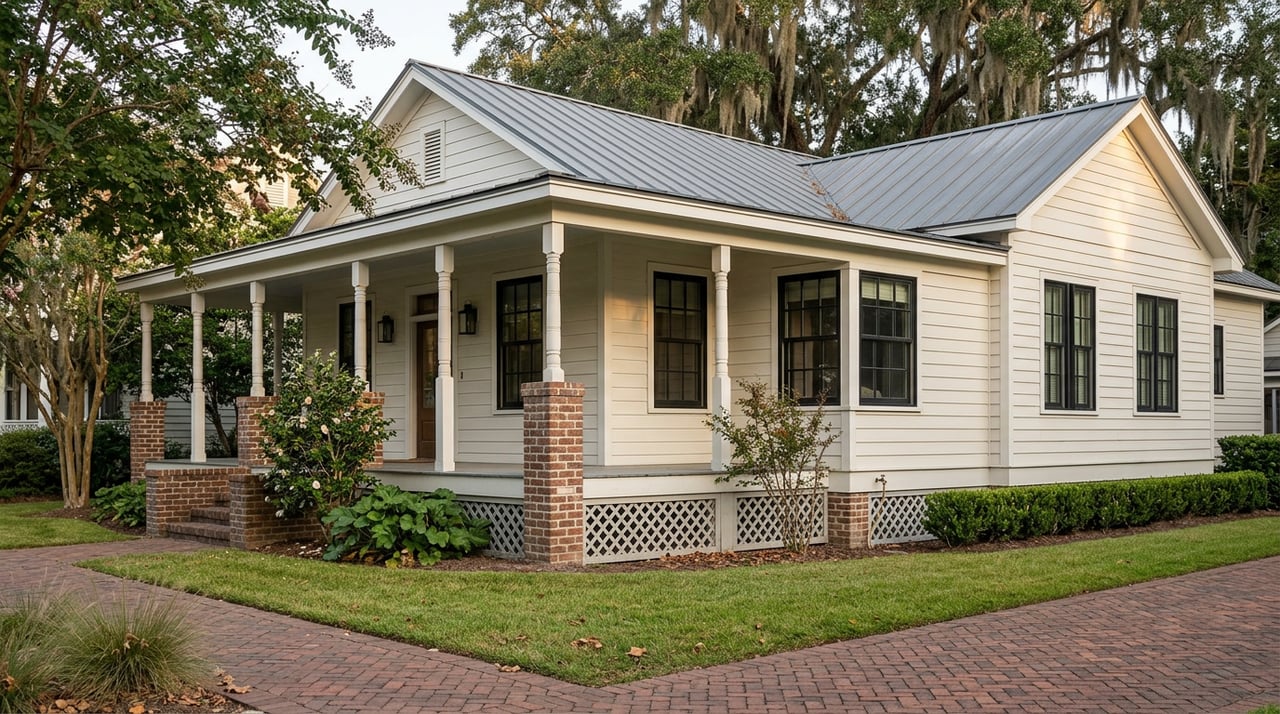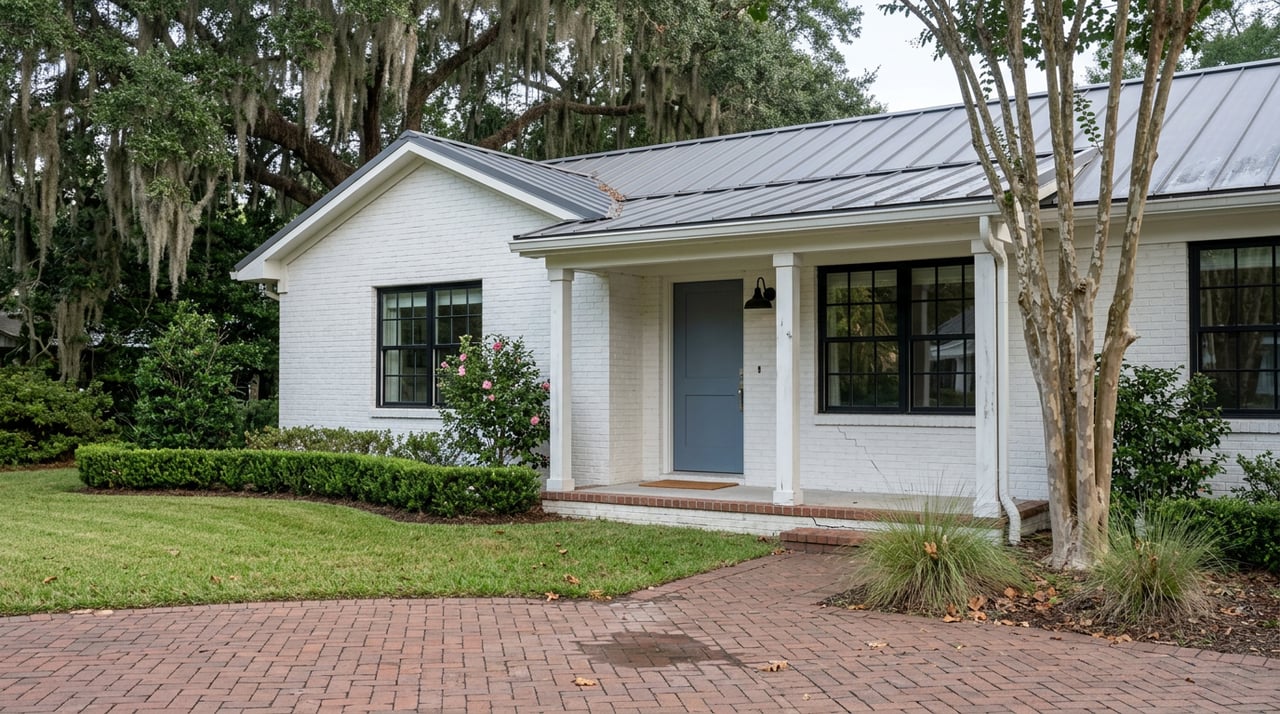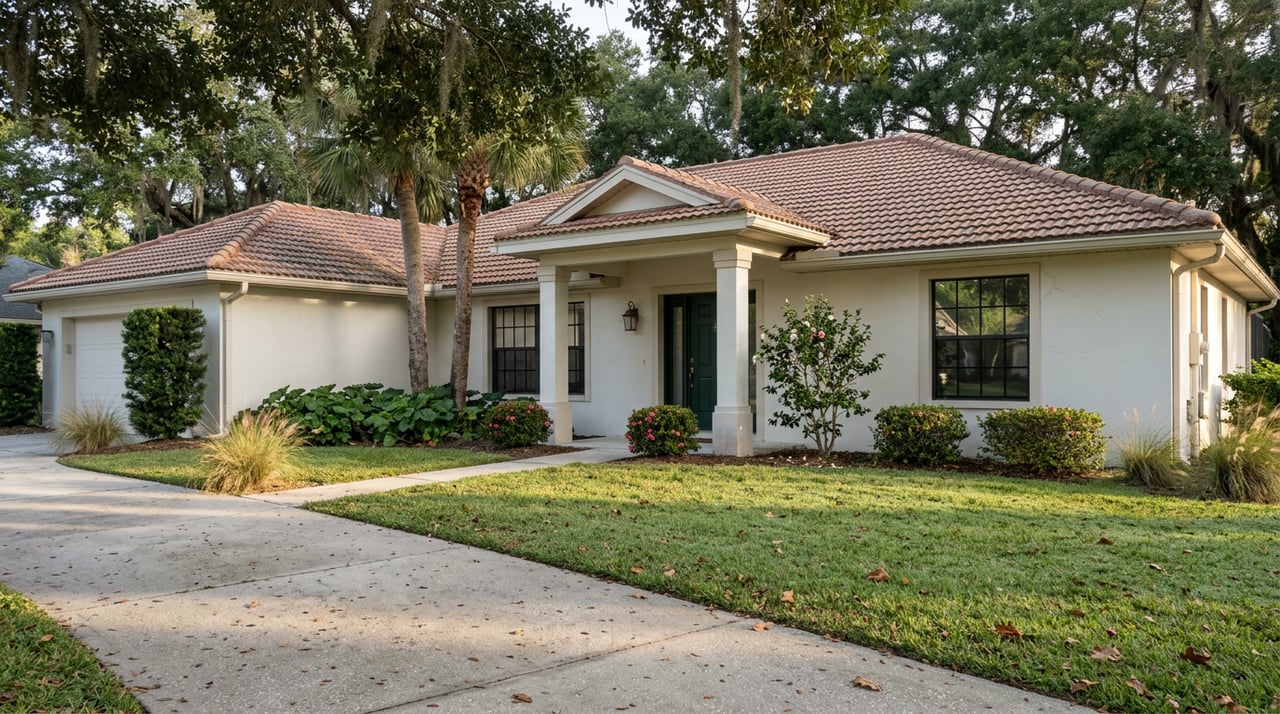
Two homes closed under the same neighborhood label not long ago. One was a townhome-style condo a short walk from the shops and restaurants of Pier Village, the kind of unit with a shared pool and a nautical-themed kitchen. The other sat on a cul-de-sac off Kings Way, overlooking a fairway on the Retreat Golf Course, behind a gate, on nearly half an acre. Both listings carried the same neighborhood tag: St. Simons Island Club.
If you were watching the market from a portal that month, you saw one median price. That number told you almost nothing about either home, because it was never measuring one neighborhood. It was measuring two.
One Name, Two Places
St. Simons Island Club, sometimes called Island Club at Retreat, is genuinely a gated community. It has roughly 400 single-family homes centered on the Retreat Golf Course, built mostly from the 1980s through the 2000s, arranged along winding streets under a canopy of live oaks and pines that local listings describe as an "Avenue of Oaks" setting. Residents there have access to a community pool, tennis and pickleball courts, and on-site dining at the Retreat clubhouse's Davis Love Grill. That community sits off Kings Way, a few minutes from the water but not walkable to it.
That is one real estate product. But when you search "St. Simons Island Club" on a major listing portal, you also pull in condo and townhome regimes that share almost nothing with the golf-course enclave except proximity on the same end of the island. Ocean Walk, Village Green, and Island Retreat Condos are gated in their own right, walkable to Pier Village's shops and restaurants, and priced and built on a completely different logic than a single-family home on the Retreat fairways.
Two products. One label. One median.
What "St. Simons Island Club" Actually Contains
Recent listing activity makes the split easy to see once you know to look for it.
| Golf-Course Enclave (off Kings Way) | Condo Cluster (near Pier Village) | |
|---|---|---|
| Product type | Single-family, fee simple | Attached condo or townhome regime |
| Approximate home count | About 400 homes | Multiple separate regimes, smaller each |
| Typical build era | 1980s through 2000s | Varies by regime |
| Recent price examples | Roughly $845,000 (a pending sale) up to about $2.499 million | Generally well under $1 million |
| Typical lot size | Around 0.40 to 0.45 acre | Shared common areas, no private lot |
| Distance to Pier Village | A short drive | Walkable |
| HOA structure | Neighborhood-wide POA plus possible club dues | Regime-specific condo dues |
The single-family side is the community most people picture when they hear "Island Club." The condo side rides along on the same search tag because portals group listings by proximity and marketing name, not by lot type or governance structure.
Why the Median Swings by Six Figures in a Single Month
Here is where the aggregation actually costs a buyer or seller something.
In June 2025, according to Redfin's neighborhood data, the median sale price for St. Simons Island Club was $1.8 million, up 35.8 percent from the year before. Homes were taking an average of 56 days to sell, up from just 10 days the prior year. Only four homes sold that month.
Four sales is not a market. It is a coin flip on product mix. If three of those four sales were golf-course estates and one was a condo, the median tilts sharply toward the estate price. If the mix flips the next month, the median can drop by hundreds of thousands of dollars with no actual change in what any single home is worth. The 35.8 percent year-over-year jump and the swing in days on market are just as easily explained by which type of home happened to close as by any real shift in demand.
This is the trap of shopping neighborhoods by headline number. A researcher comparing St. Simons Island Club against another area on price alone is really comparing a blended average of two unrelated products, weighted by whatever four or five transactions happened to close that month.
The Club Membership Isn't Automatic Either
The aggregation problem doesn't stop at price. It shows up again in club access.
Public community descriptions often state that Island Club residents are eligible for Sea Island Club membership, but the actual language varies from listing to listing. Some homes reference membership being available. Others reference full membership rights. The St. Simons Island Club Property Owners' Association governs the neighborhood-wide structure, but membership eligibility tied to any specific address is not something you can assume from the neighborhood name alone.
Annual HOA figures for the golf-course side of the community also vary by address, generally landing somewhere between about $750 and $1,100 a year based on recent listing records. That is a meaningful range if you are budgeting for carrying costs, and it means two homes on the same street can carry different numbers depending on lot size, phase of the development, or amenity access tied to that particular parcel.
None of this is unusual for an established coastal community. It is just invisible if all you see is a portal's summary card.
What This Means If You're Comparing Neighborhoods on Paper
If St. Simons Island Club is on your shortlist, treat the neighborhood name as a starting point, not an answer. Before you compare it to anywhere else on the island:
- Ask which physical cluster a specific listing sits in: the gated golf enclave off Kings Way, or a condo regime nearer Pier Village. The answer changes almost everything else on this list.
- Request closed comparable sales by street and product type, not by neighborhood tag. A single-family home on Kings Way and a condo in Ocean Walk should never be compared to each other as if they were substitutes.
- Confirm the HOA dues and any club membership language in writing for the exact address, since both can differ from what a general description implies.
- If Sea Island Club access matters to your decision, verify it with the Membership Office before you write an offer rather than assuming it comes with the address.
- Ask how many comparable sales actually support the price you are being shown. A median built on four transactions deserves more scrutiny than one built on forty.
This is also where working with someone who tracks the local MLS street by street pays off. A portal's neighborhood boundary is a convenience for search filters. It was never designed to answer the question a buyer or seller actually needs answered, which is what a specific home like this one, on this street, has actually sold for recently.
A Few Questions Worth Asking Next
Are all St. Simons Island Club homes gated? The golf-course enclave off Kings Way is gated. The condo regimes that share the neighborhood tag, such as Ocean Walk and Island Retreat Condos, have their own separate gates and amenities, distinct from the single-family community.
Does every Island Club home include Sea Island Club membership? No. Public listing language varies by address, with some homes referencing membership availability and others referencing full membership rights. Confirm this directly with the Membership Office for the specific home you are considering.
How many homes are actually in the golf-course community? Roughly 400, based on MLS data referenced as recently as May 2026, spread across streets built mostly from the 1980s through the 2000s under a canopy of live oaks and pines.
If you're weighing St. Simons Island Club against another Golden Isles neighborhood, or trying to figure out which side of this particular community actually fits your budget and lifestyle, that is exactly the kind of street-level detail worth sorting out before you fall in love with a number on a screen. Our guide to buying in St. Simons Island Club walks through the HOA disclosures, reserve studies, and membership timing in more depth if you want to go further.
Lori Lynn has spent close to a decade tracking these distinctions street by street across St. Simons Island and the rest of Glynn County, the kind of concierge-level attention that comes from a background in hospitality applied to real estate. If you're trying to make sense of what a neighborhood's numbers actually mean for the home you're considering, Let's Connect.